
On December 13, when winter advances and the days seem to slow down, in Apulia light returns to the forefront thanks to one of the most heartfelt celebrations of the popular calendar: the feast of Saint Lucy, the saint who protects the eyes and who, according to ancient tradition, brings hope, brightness, and good fortune. In many Apulian towns— from small inland villages to the large coastal squares— dawn already finds the streets alive: processions, market stalls, and the scents of sweets and votive breads tell of a faith that survives through simple gestures deeply tied to the land.
Indice
A feast of light, processions, and ancient traditions: the rite of St. Lucy
Unlike other celebrations that have faded over time, Saint Lucy remains a vibrant and heartfelt ritual. Processions light up streets and alleys with candles and lanterns, while bonfires—symbols of purification and rebirth—warm the air on the eve. The devotion is heartfelt, spontaneous, and popular: it is a family celebration, marked by children holding small candles and elders recalling the times when Saint Lucy was invoked during the olive harvest to protect eyesight and the strength needed for work.
Light— the fundamental element of Saint Lucy’s symbolism— is the thread connecting faith and tradition. Saint Lucy, a martyr from Syracuse, is the protector of eyesight: people turn to her for clarity, healing, and protection. In Apulia, a land of olive trees and bright horizons, this symbolism has found a particularly deep resonance, becoming part of the cultural heritage of many communities.
The “Eyes of Saint Lucy”: sweets of the ritual
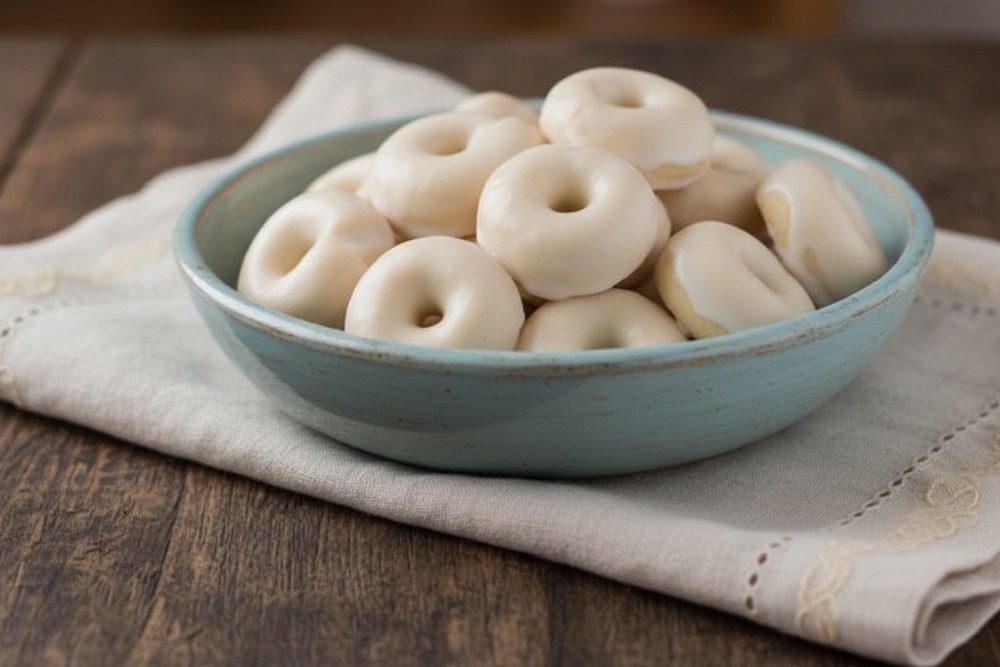
Among Apulian culinary traditions dedicated to the saint, the “Occhi di Santa Lucia” stand out. These sweet, white taralli are prepared with flour, oil— traditionally the family’s own olive oil— and white wine. After baking, they are dipped into a sugar glaze that coats them like a thin, shiny veil, evoking the purity and light Saint Lucy embodies.
They are not simple sweets: they are votive breads, once offered during the procession or shared among neighbors as a gesture of good omen. Their round shape and white glaze symbolically recall eyes, the gift of sight, and protection. Every family preserves its own recipe, often handed down by grandmothers who would begin kneading at dawn, while outside the streets filled with the scent of market stalls.
Today, the Eyes of Saint Lucy remain a sweet, identity-driven symbol of the celebration: a way to bring memory and the simple flavor of tradition to the table.
The recipe for Occhietti di Santa Lucia
Crunchy, fragrant, and coated with a delicate glaze, the Occhietti di Santa Lucia are a symbol of devotion and sweetness—perfect to enjoy with family or to give as a gift on the saint’s feast day.
Ingredients
250 g èViva Dolce 190 soft wheat Type 0 flour
about 80 ml dry white wine
60–100 ml Olio Piano
a pinch of salt
(optional) anise or fennel seeds, or a pinch of cinnamon
For the glaze:
150–250 g powdered sugar
25–40 ml hot water
Method
In a large bowl, mix the sifted flour with a pinch of salt and, if desired, some aromatic seeds.
Add the extra-virgin olive oil and the white wine. Knead until you obtain a soft, smooth dough.
Transfer the dough to a lightly floured surface and form thin ropes.
Cut into 8–10 cm pieces and join the ends to create small rings.
Place the Occhietti on a baking tray lined with parchment paper and bake at 180°C for 20–25 minutes, until slightly golden.
Let them cool completely. Prepare the glaze by mixing powdered sugar and hot water until smooth and dense.
Dip each biscuit into the glaze, drain, and let dry on a rack until the surface becomes white and firm.
Ancient traditions, timeless flavors
These traditions preserve the authentic flavors of our land: simple, genuine, and deeply tied to memory. They are ancient gestures, passed down through generations, that can also be found in Agricola Piano’s products—crafted with the same care and respect for raw ingredients.
If you want to bring the truest essence of Apulia to your table, discover our natural èViva flours and our extra-virgin olive oil: genuine ingredients for recipes that tell the story of our culinary heritage.